


NANO BT
We are a company that belongs to the AVance Biotech Group, which mainly focuses on generating clean biological-based products that can provide effective solutions to problems in different industrial areas. The versatility of our customers is given by our ability to extract, isolate and stabilize molecules from nature to apply them to the industry.
Our beginnings date back to 1992, since then, our expertise has been mainly focused on antagonistic microorganism culture, enzyme extraction and stabilization, enzyme inhibition, increasing metabolic activity in metabolic pathways of interest, repair of structural proteins, increase of molecular bioavailability, recovery of lost biochemical environments in organisms, cell regeneration and obtaining nano-metals and nano-materials.
The interesting thing about our know-how is that we have been able to apply these self-originated technologies in areas such as:
human health
human welfare
agriculture
aquaculture
bio nanotechnology
Biotechnology is applicable to any branch of human activity, we just need to know, how to adapt it to different industrial requirements
In 2008 we started with nanotechnology, bio-nanotechnology, and their applications. We currently have the industrial capacity to produce metallic nano copper, graphene and carbon nanotubes. In addition, the composition of our nano copper production batches, is certified by the Independent Global Assaying Services- IGAS laboratory (Goslar, Germany, www.raremetals.de/igaseng.html). Over time we have been able to apply these products to the development of new products and/or technologies. All these products and developments are marketed by our company Nano Biotech.
Products
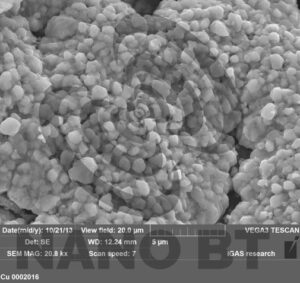

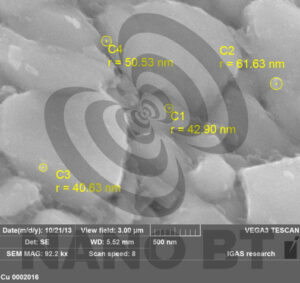
Copper Nanoparticle
| Product name | Nano Cu |
Description | Copper nanoparticles obtained by migration selective ion of copper, from pentahidrate copper sulphate. It’s a product that has a copper purity of 99.6% with a particle size of < 50 nm. Each spherical form nanoparticle is free from oxidation. |
| Uses | Pharmaceutical, electronics, aeronautics and space industries, catalyst, sanitizer. |
PHYSICAL AND CHEMICAL PROPERTIES
| Presentation | Metallic copper nanoparticles |
| Appearance | Metallic powder |
| Shape | Spherical and homogeneous |
| Physical states | Solid |
Colour
| Copperish color when it is free of oxygen and bottled with argon (inert gas). Brown varying degrees depending on degree of spontaneous oxidation |
| Odor | Odorless |
| Boiling point | 2595°C |
| Melting point | 1083°C |
| Nanoparticles size | <50 nm |
| Density | 8,94g/ml |
| Solubility | Slightly soluble in dilute acid, slightly soluble in water and ammonia |
| Steam pressure | 1mmHg to 1628°C |
| Stability | Stable product in normal storage conditions in original sealed container |
Graphene
Product name | Graphene |
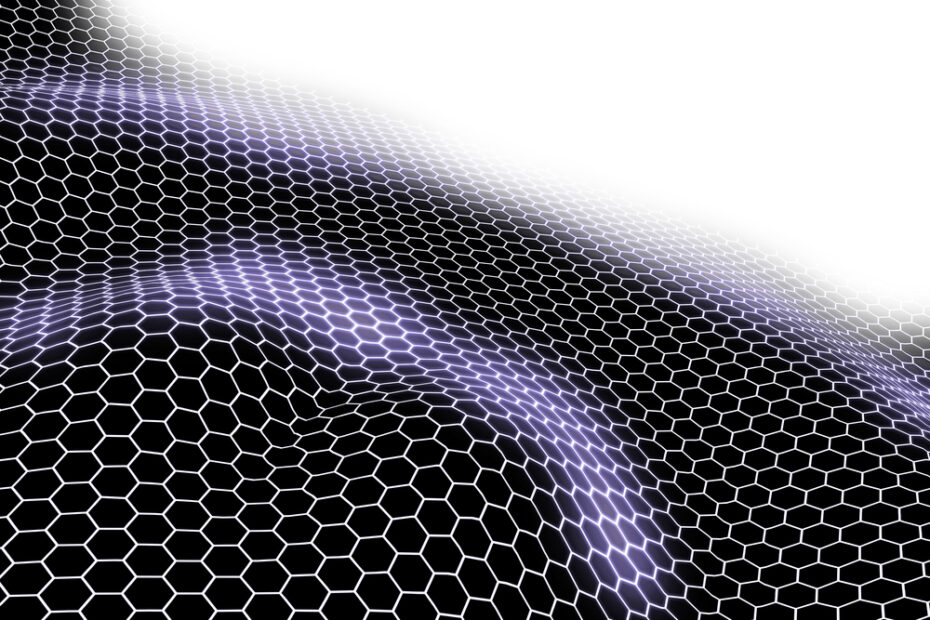
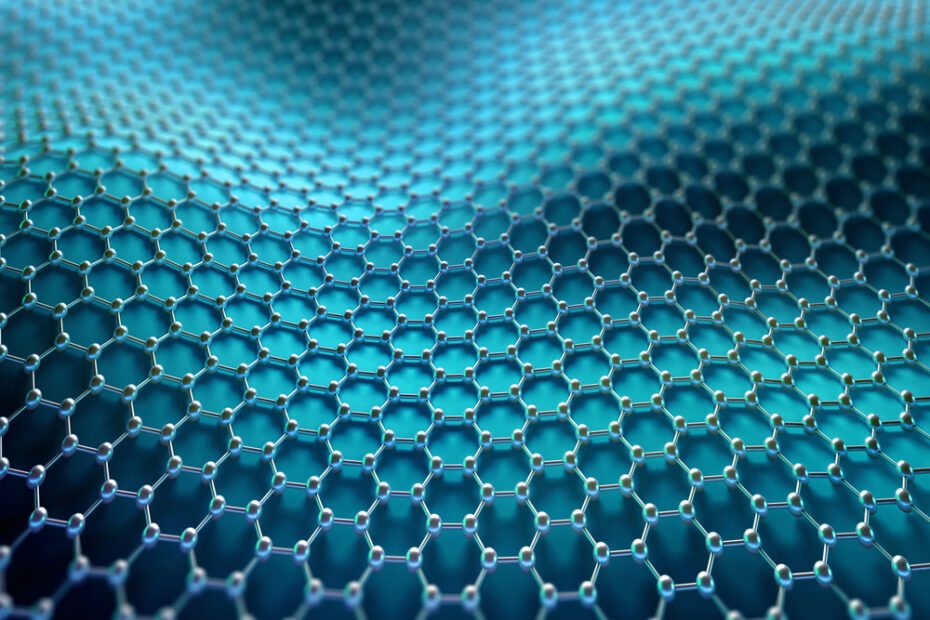
Description | This material arises when 6 carbon atoms join to form a hexagon, this last join with other hexagons to create a monolayer on a single plane. Given this form of union, the material, acquires properties that makes it strong and has other remarkable qualities, such as electrons high mobility and conductivity, a property that raises its potential use in the fast nano-devices of the future, it also has a resistance 200 times higher than steel, it is the thinnest material known and it is believed that it will replace silicon and copper in the next decade, since it is better conducting electricity by dissipating heat efficiently. In 2004, Russian-born scientists Novoselov and Geim succeeded in insulating it at room temperature. |
Uses | With its high conductivity it promises thousands of applications and potentially substitutes materials currently used in various areas, the fields of application of graphene are practically unlimited and there are already a multitude of companies researching its technological applications. This means that in a few years we will be able to see a large number of devices on the market, made partially entirely out of graphene. |


Carbon nanotubes
| Carbon nanotubes (CNT’s) | |
Description | They are allotropes carbon, like diamond, graphite and graphene. There are different types of CNT’s in terms of graphite layers that form, can be single wall carbon nanotubes (SWCNT’s) and multi wall carbon nanotubes (MWCNT’s). | |
Uses | Estos nanomateriales presentan buenas propiedades físicas como son su densidad, resistencia y conductividad térmica, que resultan interesantes en la creación de nuevos nanomateriales, por ejemplo, se han preparado materiales a base de MWCNT’s y polímeros con aplicaciones muy diversas. Entre las aplicaciones descritas para los NTC’s están su uso como biosensores, como transportadores de fármacos y agentes con propiedades antibacterianas. |
Applications
Copper Nanoparticle
Metallic and spherical copper nanoparticles, applicable to the industry where electric nanoconductors, chemical reaction catalysts and stabilizer formulations are required. As they are metallic, they maintain the isolating properties of copper and, because of the size and shape of the particle, they can be adapted for use in end products that seek to compact size, reduce weight, reduce overheating and/or improve electrical conductivity. Overheating is reduced, thanks to the particle geometry that allows increased heat dissipation.
Graphene / Carbon nanotubes
The applications are in the framework of electronics, computers parts and technology, mobile communications, energy sector, shielding industry, automotive industry, food industry, water treatment, construction, medicine and biomedicine. But above all, its applications in the field of electronics stand out, where through its capacity to store energy it can provide batteries with a longer life and a shorter charging time, establish faster connections and even contribute into improving the environment by replacing polluting materials that we are forced to use today.